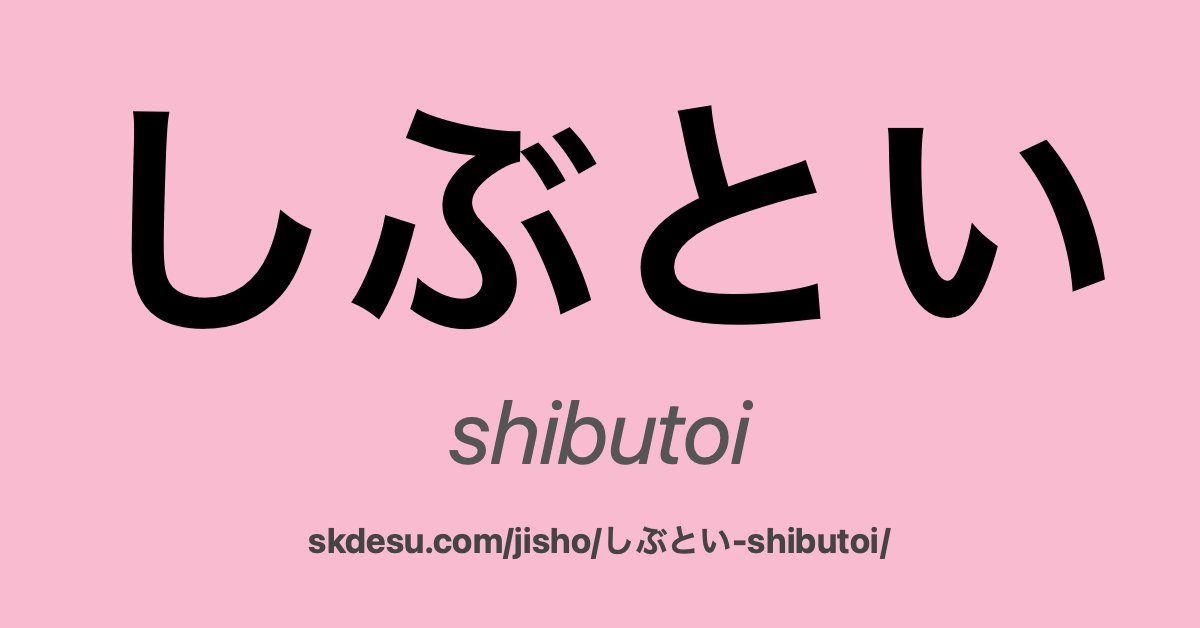
O que significa しぶとい (shibutoi) em japonês? Significado e uso
しぶとい
しぶといSignificado (PT)
Tenioso; teimoso
Significado em Inglês (EN)
tenacious;stubborn
Definição Completa
Ordem dos Traços
Se você já estudou japonês ou assistiu a algum anime, pode ter se deparado com a palavra しぶとい (shibutoi). Ela é um daqueles termos que carregam um significado mais profundo do que a tradução literal sugere. Neste artigo, vamos explorar o que essa palavra realmente significa, sua origem, como é usada no cotidiano japonês e até algumas curiosidades sobre seu uso na cultura pop. Se você quer entender por que os japoneses usam しぶとい para descrever certas situações ou pessoas, continue lendo!
O significado de しぶとい no japonês
Traduzir しぶとい para o português não é tão simples, pois ela abrange nuances que variam conforme o contexto. Em geral, pode significar “teimoso”, “resistente” ou “difícil de derrotar”. No entanto, diferentemente de palavras como 頑固 (ganko – teimoso no sentido negativo), しぶとい tem uma conotação mais positiva, muitas vezes associada à persistência e resiliência.
Um exemplo clássico é quando alguém se recusa a desistir diante de dificuldades. Se um lutador de sumô continua resistindo mesmo quando está em desvantagem, os comentaristas podem dizer que ele é しぶとい. Também pode ser usado para descrever algo difícil de remover, como uma mancha teimosa ou um problema que persiste.
A origem e os kanjis de しぶとい
A palavra しぶとい é escrita geralmente em hiragana, mas também pode aparecer com os kanjis 渋い ou 澁い (ambos significando “adstringente” ou “áspero”). A relação entre o sabor adstringente de certos alimentos e a ideia de persistência vem da sensação de “resistência” que esses sabores deixam na boca, difícil de eliminar rapidamente.
Curiosamente, o kanji 渋 também aparece em palavras como 渋滞 (shūtai – congestionamento), reforçando a ideia de algo que não flui facilmente. Essa conexão ajuda a entender por que しぶとい é usado para descrever situações ou pessoas que não cedem facilmente.
Uso cultural e frequência no cotidiano japonês
No Japão, ser しぶとい não é necessariamente ruim. Pelo contrário, em muitos contextos, é um elogio. Um atleta que não desiste mesmo quando está perdendo, um estudante que persiste nos estudos ou até um idoso que mantém uma saúde forte podem ser chamados de しぶとい. Essa valorização da persistência está alinhada com conceitos culturais como 忍耐 (nintai – paciência) e 根性 (konjō – determinação).
Na mídia, a palavra aparece frequentemente em esportes, dramas e até em animes. Personagens que se recusam a cair mesmo após várias derrotas muitas vezes são descritos como しぶとい. Se você assistir a lutas de shōnen como “Naruto” ou “Boku no Hero Academia”, vai perceber que essa característica é bastante celebrada.
Como memorizar e usar しぶとい corretamente
Uma maneira eficaz de lembrar o significado de しぶとい é associá-la a situações em que algo ou alguém demonstra resistência incomum. Pense em um inseto que não morre mesmo depois de vários golpes (um exemplo um tanto mórbido, mas comum em conversas cotidianas no Japão). Essa imagem ajuda a fixar a ideia de persistência teimosa.
Na hora de usar, lembre-se de que しぶとい pode ser tanto um elogio quanto uma observação neutra. Evite aplicá-la em contextos muito formais, a menos que esteja claro que é um comentário positivo. Por exemplo, chamar seu chefe de しぶとい sem contexto pode soar estranho, mas elogiar um colega de trabalho por sua persistência em um projeto é totalmente adequado.
Sinônimos
- 頑固 (ganko) – Teimoso; inflexível, resistente a mudanças.
- 強情 (gojō) – Teimoso; obstinado, especialmente em manter a opinião própria.
- 固い (katai) – Firme; rijo, pode se referir a uma teimosia em um contexto mais geral.
- 難しい (muzukashii) – Difícil; complicado, pode se referir a uma situação difícil de lidar.
- 手強い (tegowai) – Duro de lidar; desafiador, implica em resistência ou obstinação em um contexto mais físico ou prático.
Faça atividades com esta palavra
Utilize nossas ferramentas para memorizar a leitura e o significado.